



Inspirations
The New Thai Aesthetic: Blending Culture, Technology & Global Design

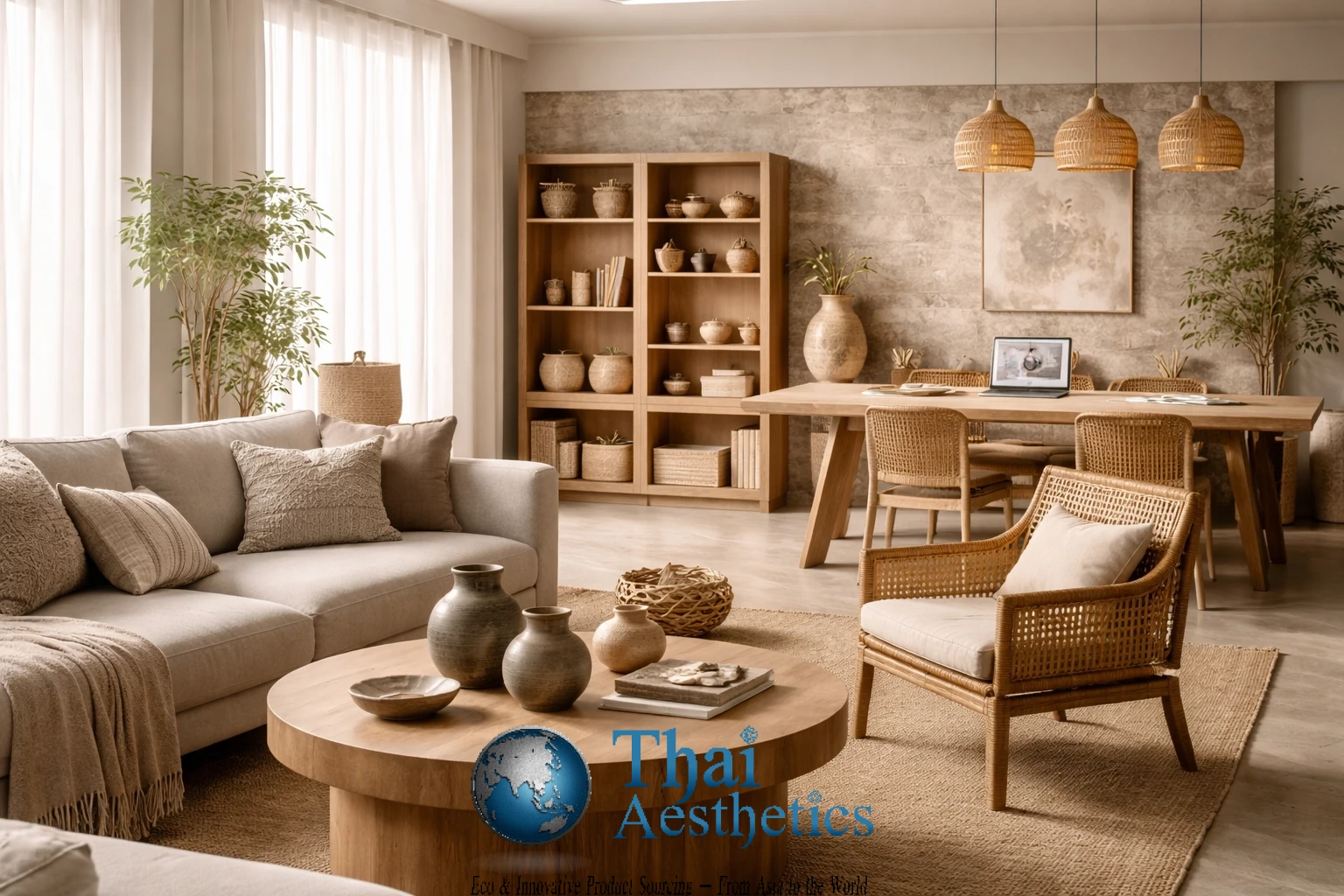
Introduction: Thailand Beyond Sourcing
For decades, Thailand has been described in global supply chains through a narrow lens: cost efficiency, craftsmanship, manufacturing capability, or exotic cultural influence. While these attributes are not incorrect, they are incomplete.
What is emerging today is something far more powerful.
Thailand is no longer simply a place where products are made.
It is becoming a design philosophy—one that blends cultural depth, material intelligence, technological adaptability, and global sensibility.
The New Thai Aesthetic is not about nostalgia or decoration.
It is about how culture informs design thinking, how tradition evolves through technology, and how restraint, balance, and human-centered values translate into globally relevant products.
This shift marks a profound repositioning: from sourcing country to design origin.
What Defines the “New Thai Aesthetic”?
The New Thai Aesthetic is not a single visual style.
It is a system of values expressed through design.
At its core, it is defined by five interconnected principles:
- Cultural Intelligence, Not Cultural Imitation
- Material Honesty Over Ornamentation
- Technology as an Enabler, Not a Distraction
- Restraint as a Design Strength
- Global Relevance Without Cultural Dilution
These principles allow Thai design to travel globally without losing its identity—and to evolve without becoming generic.
From Craft to Conscious Design Language
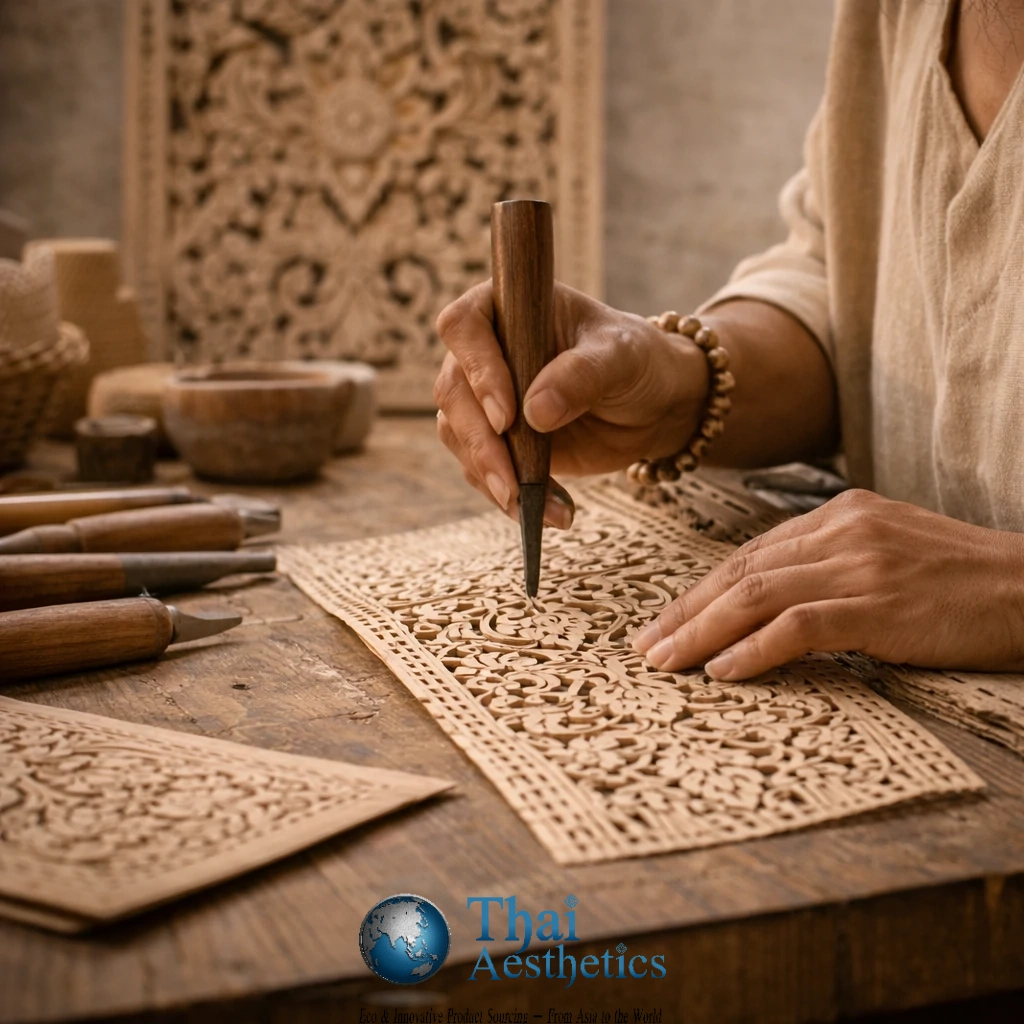
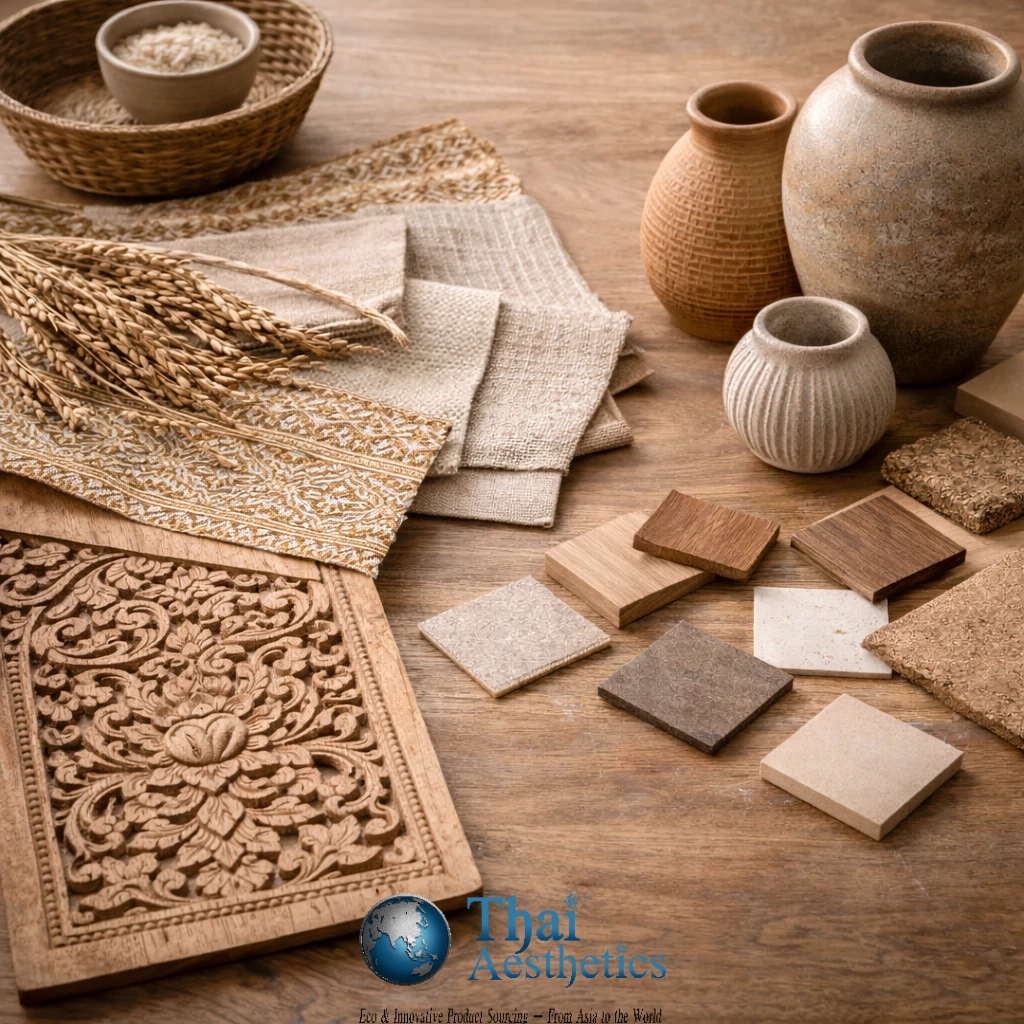
Thailand’s design heritage is deeply rooted in craftsmanship—wood, rattan, ceramics, textiles, metalwork, and natural fibers. Traditionally, these crafts were localized, functional, and culturally embedded.
What has changed is not the craft itself, but the intent behind its application.
Modern Thai designers are no longer reproducing tradition.
They are translating it.
- Rattan becomes structural, modular, and architectural
- Textiles become material systems, not patterns
- Ceramics evolve into functional minimalism
- Woodwork emphasizes longevity and joinery logic
The New Thai Aesthetic does not romanticize the past.
It extracts principles from it.
Culture as Design Intelligence
In Thai design philosophy, culture is not surface decoration—it is embedded logic.
Concepts such as:
- Balance
- Impermanence
- Respect for materials
- Harmony between form and function
These are not trends. They are decision frameworks.
When applied to contemporary product development, they result in:
- Fewer but better components
- Thoughtful proportions
- Calm, non-aggressive aesthetics
- Products that age gracefully rather than expire
This is why Thai design adapts so naturally to global markets: its cultural foundation aligns with modern demands for sustainability, longevity, and emotional value.
Technology as a Silent Partner
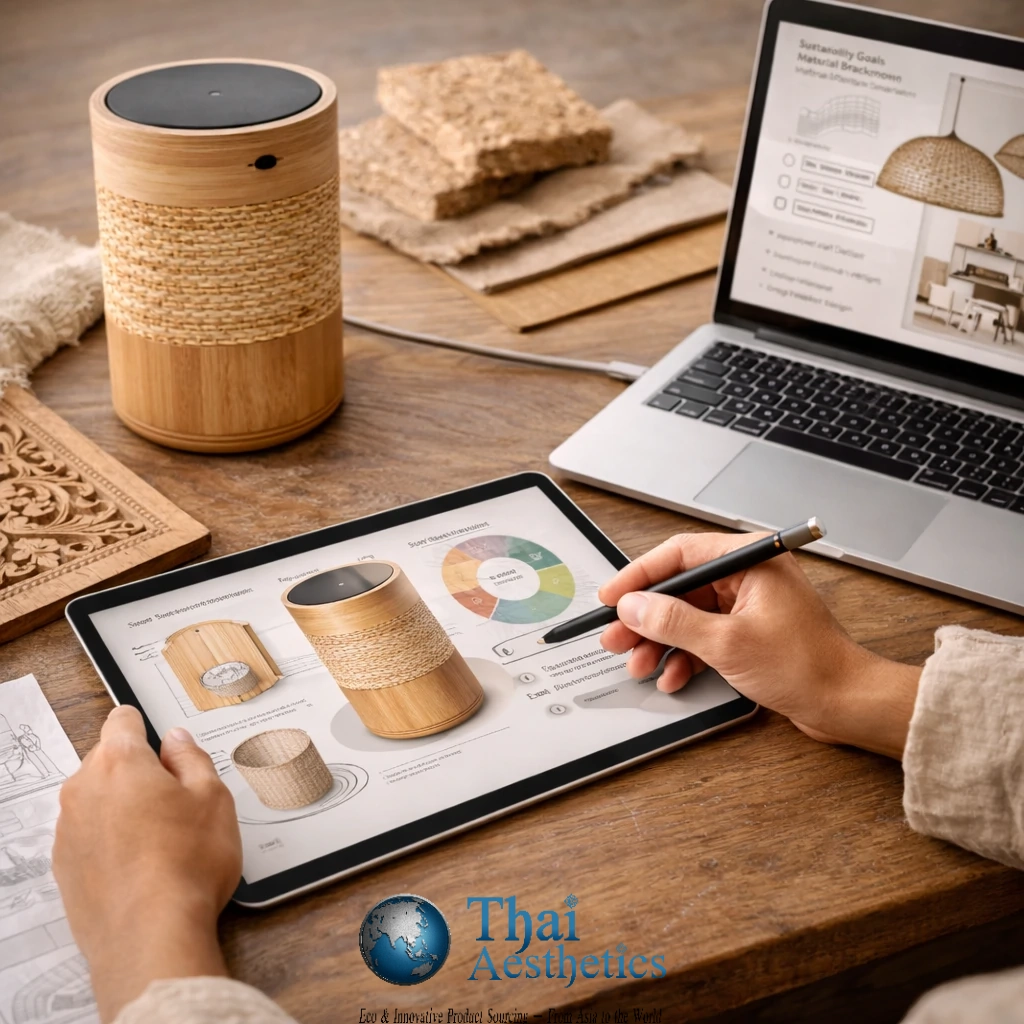
One of the most defining characteristics of the New Thai Aesthetic is how it uses technology.
Technology is present—but it is rarely loud.
Rather than prioritizing spectacle or novelty, Thai design integrates technology as a support system:
- Digital tools enhance material efficiency
- AI assists forecasting and design intelligence
- Advanced manufacturing supports consistency and scalability
Technology does not overpower the object.
It serves the intent.
This approach resonates globally, particularly in markets that are moving away from over-designed, tech-dominated aesthetics toward quieter, more human-centered solutions.
Minimalism Without Sterility
Minimalism in Thai design is not imported—it is organic.
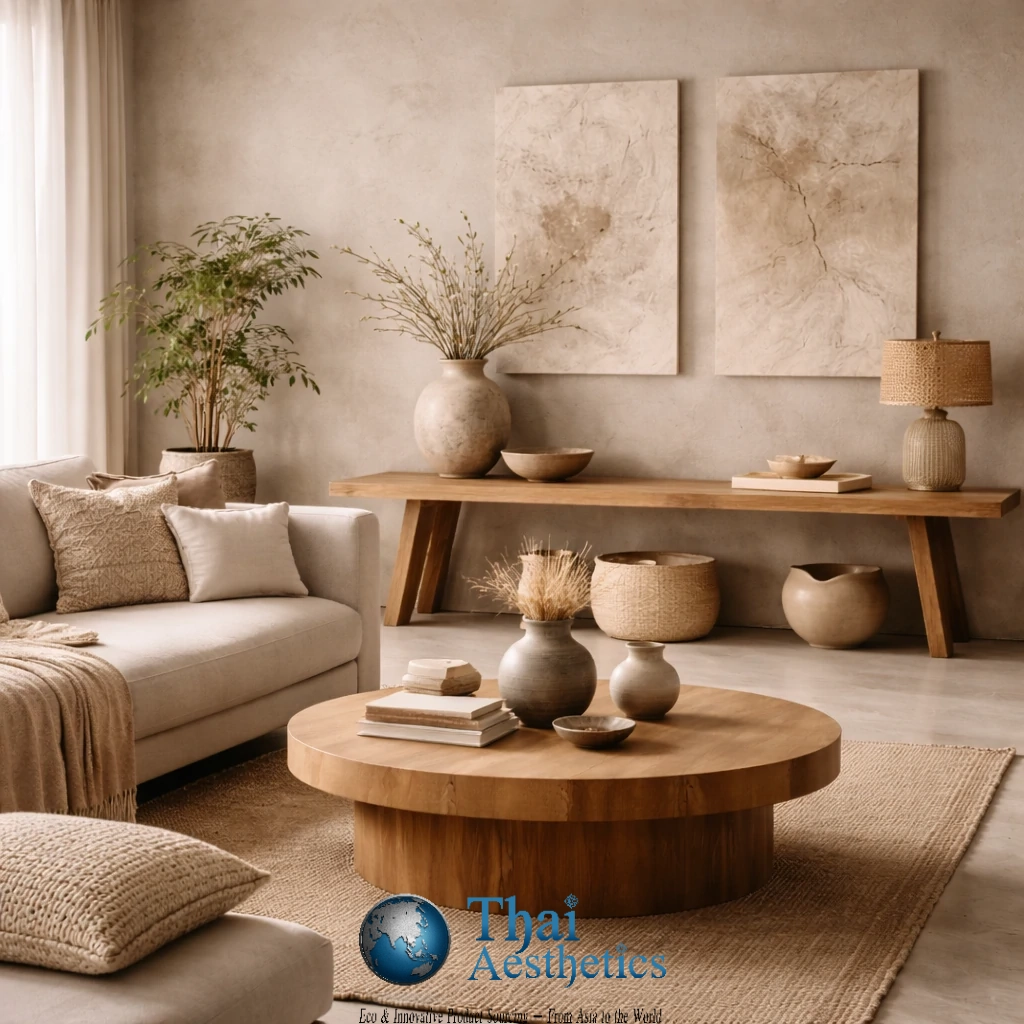
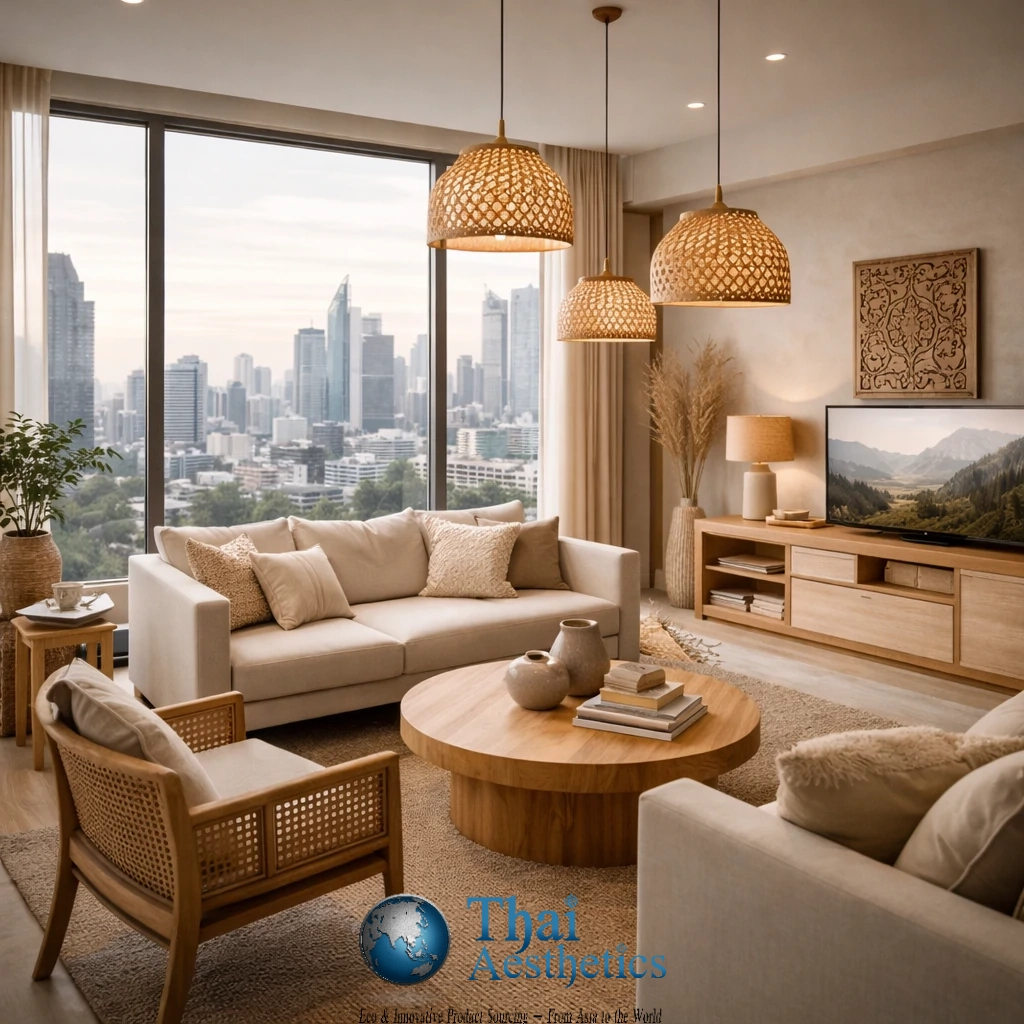
Unlike rigid Western minimalism or hyper-polished modernism, Thai minimalism retains warmth. It is shaped by:
- Natural textures
- Subtle imperfections
- Organic forms
- Human scale
This creates spaces and products that feel:
- Calm rather than cold
- Refined rather than distant
- Timeless rather than trend-driven
The New Thai Aesthetic demonstrates that minimalism does not have to erase identity—it can amplify it.
Global Design Without Losing Local Soul
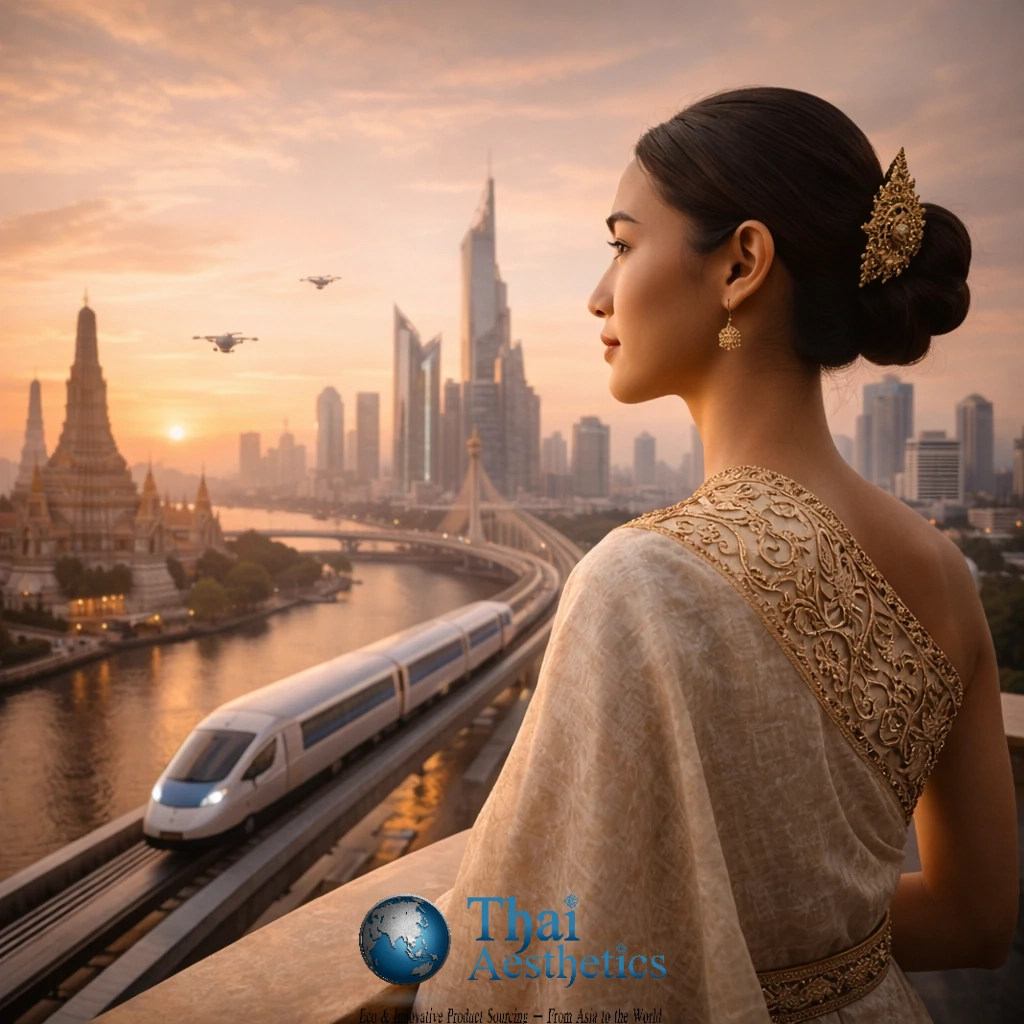
One of the greatest challenges in global design is maintaining authenticity at scale.
Thai design is uniquely positioned to meet this challenge because its core values are not dependent on visual motifs. They are philosophical.
This allows Thai-inspired products to:
- Adapt to diverse cultural contexts
- Integrate seamlessly into international interiors
- Appeal across demographics and markets
Global relevance does not require cultural compromise when the foundation is strong.
Sustainability as an Inherent Outcome
The New Thai Aesthetic does not treat sustainability as a feature—it treats it as a byproduct of good design.
When products are:
- Made from honest materials
- Designed for longevity
- Crafted with restraint
- Aligned with circular thinking
Sustainability emerges naturally.
This approach avoids greenwashing because sustainability is not layered on—it is designed in.
Why the World Is Paying Attention
Global designers, institutions, and brands are increasingly looking toward Thailand not for cost advantages, but for design insight.
They recognize that:
- Western design is facing saturation
- Fast design is losing credibility
- Consumers value meaning over novelty
Thailand offers a different path—one that balances modernity with humanity.
This makes the New Thai Aesthetic especially relevant for:
- Eco-luxury brands
- Hospitality and lifestyle sectors
- Sustainable product ecosystems
- Design-led B2B platforms
Thai Aesthetics: Curating the New Design Narrative
At Thai Aesthetics, this shift is not theoretical—it is intentional.
The platform positions Thailand not as a supplier, but as a design intelligence hub:
- Bridging craft and technology
- Translating cultural values into global products
- Curating design systems, not just SKUs
By working with designers, institutes, and manufacturers, Thai Aesthetics enables brands to access the New Thai Aesthetic as a strategic advantage, not a stylistic choice.
Design Institutes and the Next Generation
A critical pillar of this movement is education.
Thai design institutes are increasingly collaborating with global partners to:
- Research sustainable materials
- Explore circular systems
- Develop culturally grounded innovation
The New Thai Aesthetic is not static.
It is being taught, tested, and evolved.
This ensures continuity—not just in style, but in thinking.
A Design Philosophy for the Next Decade
The future of design will be shaped less by trends and more by principles.
The New Thai Aesthetic offers:
- Cultural depth without nostalgia
- Technology without dominance
- Sustainability without marketing noise
- Global relevance without uniformity
In a world overwhelmed by excess, it offers clarity.
Conclusion: Thailand as a Design Origin
The New Thai Aesthetic signals a fundamental shift.
Thailand is no longer just where products are made.
It is where design thinking converges—culture, technology, sustainability, and global relevance in balance.
This is not a moment.
It is a movement.
And it is only beginning.