



Inspirations
Foldable, Modular & Smart: Design Trends for Future-Ready Products


Introduction: Why Product Design Is Being Forced to Evolve
Product design is no longer driven by aesthetics alone. It is being reshaped by forces far more structural: shrinking urban living spaces, rising material costs, sustainability regulations, and changing consumer behavior. In this environment, traditional “static” products—designed for single use cases and fixed environments—are increasingly misaligned with how people live, move, and consume.
Consumers today demand flexibility. They expect products to adapt to space constraints, lifestyle changes, and evolving needs. At the same time, regulators and distributors expect products to reduce waste, improve efficiency, and demonstrate responsible design thinking.
This convergence has given rise to three powerful design directions that are now shaping future-ready products across categories: foldable, modular, and smart design.
These are not surface trends. They represent a fundamental rethinking of how products are conceived, built, distributed, and used. When combined intelligently, they allow brands to deliver functionality, sustainability, and long-term value without increasing complexity or cost.
This article explores how foldable, modular, and smart design principles are redefining product development—and why they are becoming essential for brands aiming to remain relevant in the next decade.


The Pressure Points Driving New Design Thinking
Before examining the trends themselves, it is important to understand the pressures shaping them.
Urbanization and Space Constraints
More than half the world’s population now lives in cities. Apartments are smaller, storage is limited, and multifunctional living has become the norm. Products that occupy permanent space without flexibility are increasingly seen as inefficient.
Sustainability and Resource Efficiency
Design choices now directly affect environmental impact. Over-designed, single-purpose products contribute to waste, overproduction, and short life cycles. Regulators and conscious consumers are pushing brands toward smarter material use and longer product lifespans.
Lifestyle Fluidity
Work-from-home, hybrid living, frequent relocation, and multi-use environments have blurred traditional product categories. Consumers want products that move easily between contexts rather than remain fixed.
Cost and Distribution Efficiency
For brands and distributors, products that pack smaller, ship efficiently, and reduce SKU complexity offer clear economic advantages.
Foldable, modular, and smart design principles address all of these pressures simultaneously.
Foldable Design: Function Without Permanent Footprint
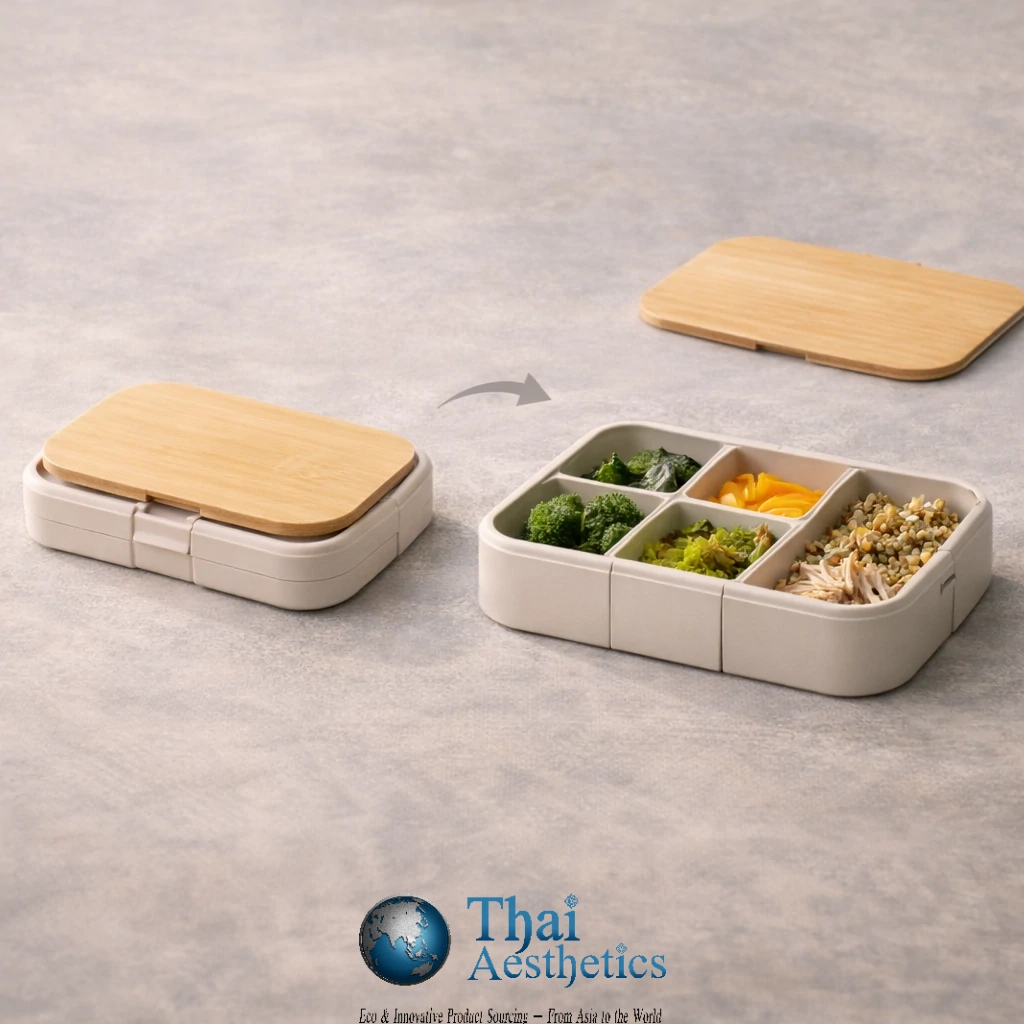
Foldable design is rooted in a simple idea: products should expand when needed and disappear when not.
Why Foldability Matters
Traditional products assume space abundance. Foldable products assume space scarcity. This shift is particularly relevant in urban environments where every square meter counts.
Foldable design allows:
- Reduced storage footprint
- Easier transport and relocation
- Lower shipping volume
- Increased functionality per square meter
This is not about gimmicks. It is about space intelligence.
Foldability as a Sustainability Strategy
From a sustainability perspective, foldable products often:
- Use fewer materials than bulky equivalents
- Reduce packaging volume
- Improve logistics efficiency
- Encourage longer-term use
By minimizing physical footprint, foldable products reduce both material waste and carbon impact across the supply chain.
Design Challenges and Solutions
Successful foldable design requires:
- Structural integrity at stress points
- Durable hinge or folding mechanisms
- Simple, intuitive operation
Poorly designed foldable products fail quickly. Well-designed ones become indispensable.
Modular Design: Products as Systems, Not Objects
If foldable design solves the problem of space, modular design solves the problem of change.
What Modular Design Really Means
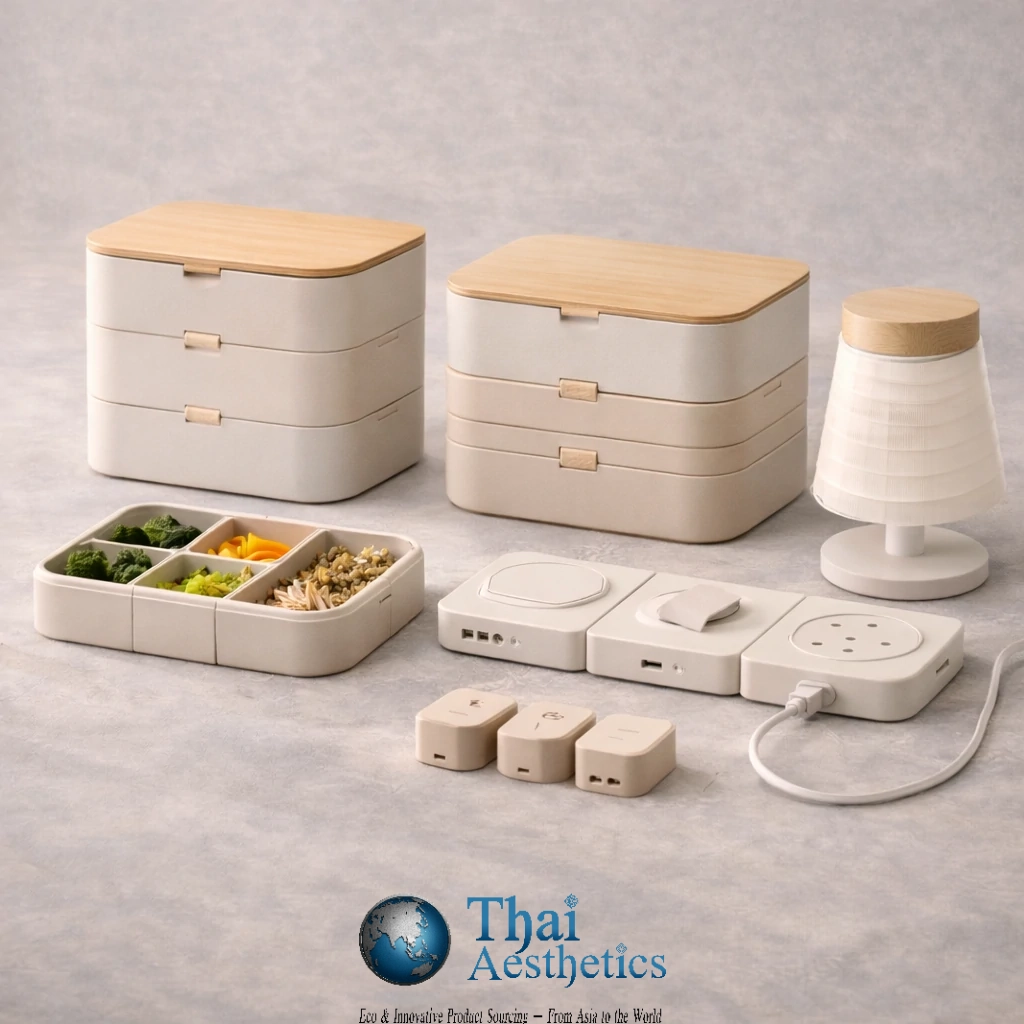
Modular products are built as systems of interchangeable components rather than fixed forms. This allows users to:
- Add or remove functionality
- Replace only worn components
- Adapt products over time
Instead of buying new products, users reconfigure existing ones.
Why Modularity Aligns with Sustainability
Modular design supports sustainability by:
- Extending product lifespan
- Reducing full-product replacement
- Minimizing waste
- Enabling repair and upgrade
From a circular economy perspective, modularity is one of the most effective ways to reduce resource consumption without sacrificing performance.
Commercial Advantages for Brands
For brands, modularity offers:
- Reduced SKU complexity
- Easier customization
- Stronger customer retention
- Lower warranty and replacement costs
It also allows brands to introduce upgrades without redesigning entire product lines.
Smart Design: Intelligence Without Over-Engineering
Smart design does not mean adding screens, apps, or complex interfaces to every product. In future-ready product development, smart design is about subtle intelligence.
The Shift Away from “Tech for Tech’s Sake”
Consumers are increasingly resistant to over-engineered products that:
- Require constant charging
- Depend on unstable apps
- Create unnecessary data dependencies
Future-ready smart products are:
- Intuitive
- Energy-efficient
- Purpose-driven
They enhance usability without demanding attention.
Examples of Smart Functionality
Smart design may include:
- Usage optimization indicators
- Energy or material efficiency feedback
- Passive sensors
- Mechanical intelligence rather than digital
The goal is to improve outcomes, not add complexity.
Smart Design as an Enabler of Sustainability
Smart features can:
- Reduce overuse
- Optimize resource consumption
- Prevent misuse
- Extend product life
When intelligence serves sustainability, products become both responsible and desirable.
Where Foldable, Modular, and Smart Design Intersect
The most future-ready products do not adopt these principles in isolation. They combine them.
A foldable product becomes more powerful when it is modular.
A modular system becomes more efficient when it is smart.
A smart product becomes more valuable when it is compact and adaptable.
This intersection allows brands to create:
- Multi-functional products
- Reduced material usage
- Scalable product ecosystems
- Stronger value propositions
The result is not novelty—but design resilience.
Urban Living as the Primary Use Case
Urban living has become the primary testing ground for future-ready products.
Consumers in cities prioritize:
- Compactness
- Adaptability
- Ease of storage
- Visual simplicity
Foldable and modular designs respond directly to these needs, while smart features ensure efficiency without intrusion.
Products that succeed in urban environments often scale globally because they solve the hardest constraints first.
Implications for Product Development Teams
Design teams must rethink their approach at a foundational level.
Design for Change, Not Permanence
Future-ready products assume that users will change environments, needs, and preferences. Design must anticipate reconfiguration rather than resist it.
Material Selection Matters More Than Ever
Foldable and modular products require materials that are:
- Durable
- Lightweight
- Repair-friendly
- Sustainable
Material intelligence becomes a core design competency.
Collaboration Between Disciplines
Engineering, design, sustainability, and manufacturing teams must work together from the start. These design principles cannot be layered on later.
Distribution and Retail Implications
From a B2B perspective, foldable and modular products offer clear advantages.
Distributors benefit from:
- Lower shipping volume
- Reduced storage requirements
- Easier inventory management
Retailers benefit from:
- Flexible display options
- Clear value storytelling
- Reduced returns due to adaptability
These advantages make future-ready products easier to scale across markets.
Why These Trends Are Not Temporary
Foldable, modular, and smart design principles are responses to structural realities, not passing trends.
Urbanization will continue.
Sustainability pressure will intensify.
Consumers will demand flexibility.
Products that ignore these realities will struggle to remain relevant.
Future-ready design is not about predicting trends—it is about designing for inevitability.
The Role of Strategic Platforms in Enabling These Designs
Implementing these principles at scale requires more than creative vision. It requires:
- Access to the right materials
- Manufacturing partners with modular capability
- Sustainability-aligned sourcing
- Design intelligence
Platforms that curate and connect these capabilities play a critical role in making future-ready design commercially viable.
Conclusion: Designing for the World We Are Entering
The next generation of products will not be defined by appearance alone. They will be defined by how intelligently they respond to space, change, and responsibility.
Foldable design addresses space.
Modular design addresses change.
Smart design addresses efficiency.
Together, they create products that are not just innovative—but fit for the future.
For brands serious about longevity, these principles are no longer optional. They are foundational.