



Inspirations
Compostable Is the New Cool: The Science Behind Sustainable Materials


INTRODUCTION: WHY “GREEN” IS NO LONGER ENOUGH
Sustainability has entered a new phase. What once functioned as a marketing advantage is now a point of scrutiny. Consumers, regulators, investors, and institutional buyers are no longer impressed by generic eco-friendly language. Instead, they are asking precise, uncomfortable questions.
What exactly is this product made of?
How does it break down after use?
Under what conditions does decomposition occur?
Does it leave behind residue, microplastics, or toxins?
Is the claim independently verified — or self-declared?
As sustainability narratives mature, credibility is replacing creativity. Brands that rely on vague environmental storytelling are increasingly exposed, while those grounded in verifiable material science are gaining long-term trust.
Within this context, compostable materials are emerging not as a trend, but as a discipline of engineered responsibility. When applied correctly, compostability offers measurable environmental outcomes rather than symbolic gestures.
This article explores the science behind compostable materials, clarifies widespread misconceptions, and explains why science-backed sustainability is becoming a strategic requirement for future-ready brands.
WHAT COMPOSTABLE REALLY MEANS — BEYOND THE LABEL
The term compostable is often used casually, but in material science it carries a very specific definition.
A material can be called compostable only if it:
-
- Breaks down into water, carbon dioxide, and organic biomass
- Leaves no toxic residue
- Does not negatively impact soil health
- Decomposes within a defined timeframe
- Does so under clearly specified composting conditions
In other words, compostability is not an aesthetic claim — it is a performance outcome.
A product that partially degrades, fragments into micro-particles, or requires undefined environmental conditions to break down does not qualify as compostable, regardless of how “natural” it appears.
This distinction matters because end-of-life impact is where most environmental harm occurs. Compostable materials address sustainability at the point where waste traditionally fails.

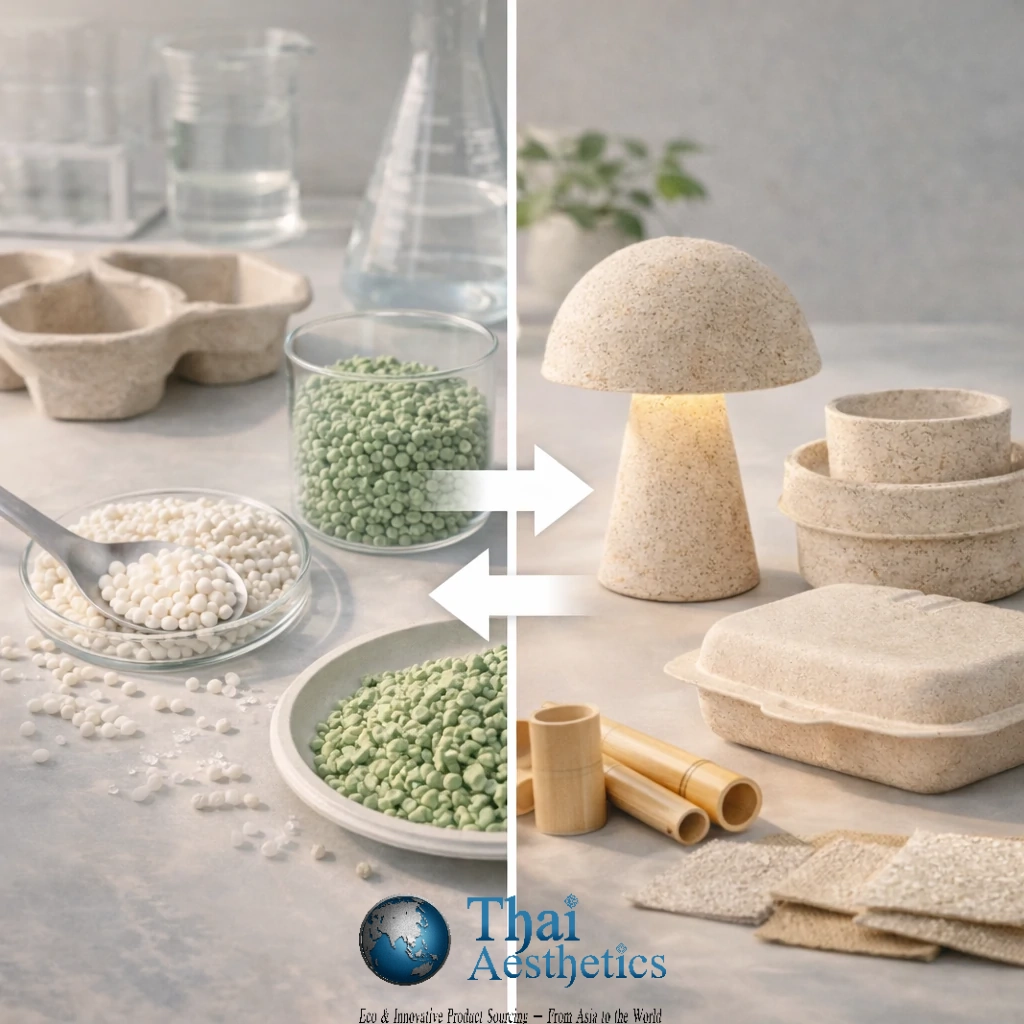
BIODEGRADABLE VS COMPOSTABLE: A CRITICAL SCIENTIFIC DISTINCTION
One of the most common sustainability errors is using biodegradable and compostable interchangeably. Scientifically, they are not equivalent.
Biodegradable Materials
Biodegradable simply means a material can break down over time. However:
- There is no defined timeframe
- Breakdown may take decades
- Materials may fragment into microplastics
- Residual toxicity is often unmeasured
Compostable Materials
Compostable materials are engineered to:
- Break down within a defined period
- Fully convert into safe organic matter
- Meet standardized testing criteria
- Leave no harmful residues
For brands operating at scale, predictability matters. Compostability offers control, traceability, and accountability, whereas biodegradability often does not.
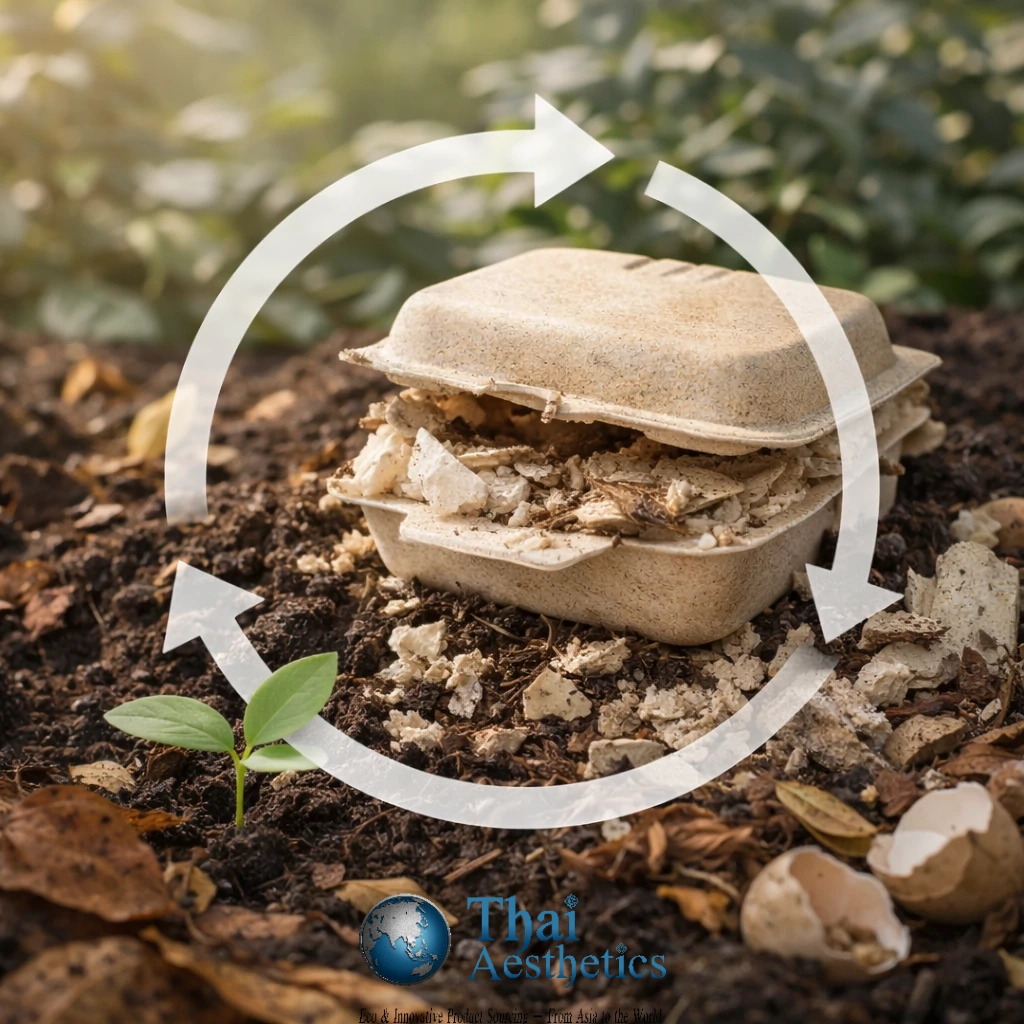
THE MATERIAL SCIENCE BEHIND COMPOSTABLE SOLUTIONS
Compostable materials are not simply “natural substitutes.” They are engineered systems, designed to perform during use and disintegrate responsibly afterward.
Common compostable feedstocks include:
- Plant-based starches (corn, cassava, sugarcane)
- Cellulose and wood pulp fibers
- Agricultural by-products
- Bio-polymers such as PLA and PHA
The scientific challenge lies in balancing:
- Structural strength
- Moisture and heat resistance
- Shelf stability
- Functional durability
- Controlled decomposition
Without proper formulation, compostable materials either degrade prematurely or persist far longer than intended. This is why material science — not storytelling — determines success.
INDUSTRIAL VS HOME COMPOSTING: WHY CONTEXT MATTERS
Compostability is not universal; it depends heavily on infrastructure.
Industrial Composting
- High temperatures
- Controlled microbial environments
- Accelerated decomposition
- Required for most certified compostable plastics
Home Composting
- Lower, inconsistent temperatures
- Longer breakdown timelines
- Limited material compatibility
Responsible brands clearly communicate where and how their products are compostable. Ambiguous claims without context undermine trust and can lead to regulatory backlash.
CERTIFICATIONS: FROM CLAIMS TO PROOF
In science-backed sustainability, certification is essential.
Recognized compostability standards include:
- EN 13432 (Europe)
- ASTM D6400 / D6868 (United States)
- TÜV Austria (Industrial & Home Compostable)
- ISO-aligned compostability frameworks
These certifications test:
- Disintegration speed
- Residual toxicity
- Soil impact
- Material composition
For B2B buyers, certifications reduce compliance risk. For investors, they reduce reputational risk. For brands, they replace claims with verifiable evidence.
WHY COMPOSTABLE MATERIALS ARE ENTERING ECO-LUXURY
Historically, compostable materials were associated with low-cost, disposable applications. That perception is changing rapidly.
Advances in material engineering now allow compostable solutions to deliver:
- Refined textures
- Neutral or premium finishes
- Structural reliability
- Design flexibility
In eco-luxury, value is shifting away from permanence of ownership toward responsibility of impact. Compostability aligns with this evolution by embedding sustainability directly into material behavior, not external messaging.
COMPOSTABLE DESIGN IS A SYSTEM — NOT A MATERIAL SWAP
One of the most common mistakes brands make is treating compostability as a single-material decision.
True compostable design considers:
- Product architecture
- Component separation
- Adhesives and inks
- Labels and coatings
- End-of-life instructions
If one element breaks the compostable chain, the system fails. Compostability must be designed from the earliest stages, not retrofitted after form and function are finalized.
SCIENCE-BACKED SUSTAINABILITY AS A BUSINESS STRATEGY
As sustainability claims face tighter regulation and rising consumer skepticism, vague eco narratives lose value.
Science-backed compostability offers:
- Regulatory alignment
- Clear consumer communication
- Reduced end-of-life environmental impact
- Stronger ESG positioning
In this sense, compostable materials are not a cost — they are a strategic asset that protects brands against future regulatory, reputational, and operational risk.
THE ROLE OF THAI AESTHETICS IN MATERIAL-LED SUSTAINABILITY
Thai Aesthetics approaches compostable materials through material intelligence, not trend adoption.
The focus is on:
- Matching materials to product function
- Aligning compostability with target markets
- Selecting certified, reliable material partners
- Integrating compostability into scalable design systems
This ensures that compostable solutions are commercially viable, design-ready, and globally relevant, rather than experimental or symbolic.
CONCLUSION: COMPOSTABLE IS NOT A TREND — IT IS A DISCIPLINE
Compostable materials represent a shift from surface-level sustainability to engineered responsibility.
They demand:
- Scientific rigor
- Honest communication
- System-level thinking
For brands willing to engage with the science — not just the story — compostability offers a credible path toward future-ready products, packaging, and material strategies.
With the right partners, compostable design becomes not just possible, but scalable.